
5 Critical Signs to inspect today
Waiting until the first heavy monsoon downpour to inspect your roof or terrace is the most common and expensive mistake property owners make. Water seepage never happens overnight—concrete slabs give distinct early warning indicators weeks in advance. Intense summer heat exceeding 45°C causes severe thermal expansion and contraction, creating micro-fissures in substrate layers and breaking brittle tile grout joints. When monsoon rains arrive, these micro-fissures channel water directly into your concrete slab, attacking structural rebar and ruining interior false ceilings. Recognizing these 5 early warning signs allows you to take timely, non-destructive preventive action backed by 100% Genuine Warranty.
5 Warning Signs of Terrace & Roof Leakage
# 1. Hairline Cracks & Thermal Micro-Fissures on Slab
Extreme summer temperature variations cause concrete and screed to expand and contract repeatedly. Look closely for spider-web hairline cracks, mortar separation around parapet wall joints, and shrinking tile grout lines. During heavy rains, capillary action draws water deep into these micro-crevices.
# 2. White Chalky Efflorescence (Shora) on Ceilings & Walls
If you notice white powdery crystalline patches (commonly known as shora) or yellow-brown water rings on top-floor ceilings or upper wall corners, moisture has already penetrated the slab matrix and is chemically dissolving free lime from concrete.
# 3. Water Ponding & Inadequate Slope Near Drain Outlets
Terrace slabs with improper slope gradients allow stagnant rainwater pools to form around rainwater pipes (parapet khurras) and AC outdoor unit bases. Constant hydrostatic pressure from standing water breaks down conventional bitumen coatings in less than 30 days.
# 4. Hollow-Sounding Delaminated Tiles & Blistering Membranes
Moisture trapped beneath old tile layers or tar felt membranes turns to steam under direct sunlight, causing delamination and balloon-like blisters. Tapping the surface produces a distinctly hollow drum-like sound, signaling total loss of waterproofing adhesion.
# 5. Musty Damp Odor, Paint Flaking & Mold Spores Indoors
A persistent damp or earthy smell in upper-floor rooms, peeling paint flakes, or dark mildew spots around ceiling cornices are conclusive evidence of active water migration. Left untreated, water corrodes internal steel reinforcement (rebar), leading to severe concrete spalling.
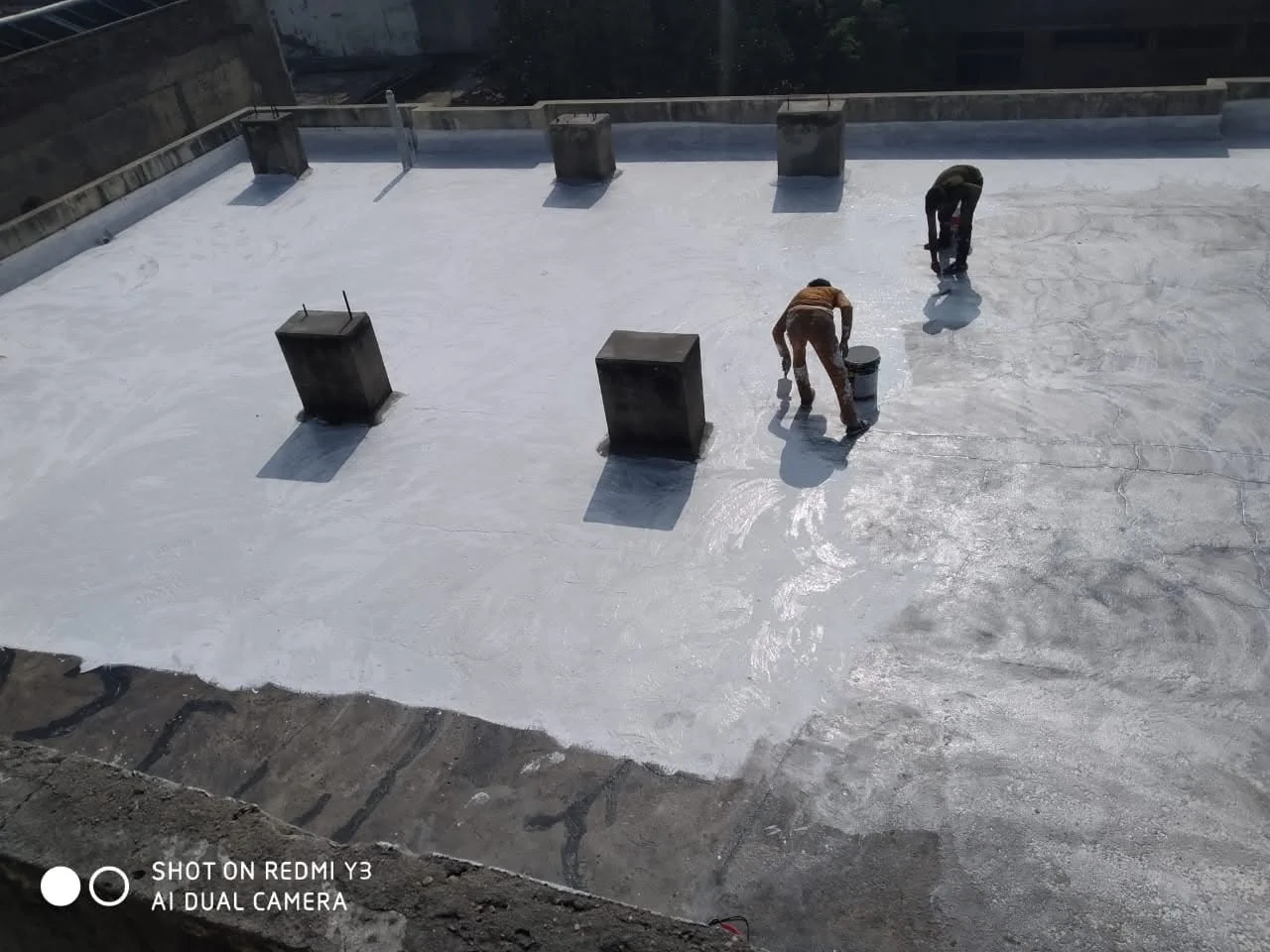
Simple steps before monsoon hits.
01 — Pre-Monsoon Digital Moisture Audit
Our certified civil engineers conduct high-precision electronic moisture scanning and thermal imaging to map hidden moisture pockets before rain starts.
02 — Substrate Preparation & Crack Stitching
We perform mechanical surface cleaning, V-groove crack opening, and fill structural fissures with elastomeric polyurethane (PU) sealants and polymer modified mortars.
03 — Multi-Layer Elastomeric Polymer Membrane
Application of German-engineered 5-layer elastomeric polymer & hybrid PU waterproof coating featuring 300%+ elongation and high solar reflectance index (SRI).
04 — 48-Hour Ponding Test & Warranty Handover
We conduct an exhaustive 48-hour continuous water ponding test to verify zero leakage performance and issue a stamp-signed 100% Genuine Warranty certificate.
Why Choose DR Waterlock for Pre-Monsoon Defense
Certified Civil Engineers & In-House Crew
100% certified technical team. We never outsource your home or commercial building's waterproofing to untrained daily-wage laborers.
German Chemical Polymer Technology
We use premium hydrophobic crystalline sealants, hybrid PU resins, and elastomeric polymers engineered specifically for extreme Indian climate cycles.
100% Genuine Direct Written Warranty
Every project is backed by our legal, stamp-signed 100% Genuine performance certificate with scheduled follow-up inspections.
Zero Tile Breaking Guarantee
Advanced non-invasive technology seals tile joints and porous slabs from within without breaking expensive marble or terrace tiles.
Frequently Asked Questions.